

Last updated : May 25, 2026 | Written & Reviewed by Advanced Team
Understanding Mental and Emotional Breakdown
The pursuit of happiness can sometimes seem like a difficult thing. Happiness, peace, and satisfaction can evade us all too well. In times like these, mental and emotional well-being are more important than ever.
Mental and emotional well-being are the cornerstones of a healthy and fulfilling life. Better mental health makes one realise one’s own abilities. It helps maintain strong relationships, a feeling of contentment, and the ability to deal with stress effectively. Whereas emotional wellness helps to adapt to change and difficult times. It involves being able to control emotions and understanding how to express them in a constructive manner.
To know more about emotional and mental health, read the article below!
What is Mental Breakdown?
Experiencing stress is a normal part of life, but when feelings become too overwhelming, they can contribute to a mental breakdown. A mental breakdown is a state of emotional dysregulation followed by episodes of severe anxiety and depression. This is not a formal diagnosis; in fact it is a condition of severe psychosocial distress that further damages the quality of life. So, anything that leads to excessive stress can trigger a breakdown. This condition is also known as a nervous breakdown, and rarely appears without warning. The symptoms progress through a series of stages, starting with mild stress and moving to a point where normal functioning is affected.
What is Emotional Breakdown?
An emotional breakdown is characterized by overwhelming emotions and an inability to continue normal daily activities. It means trouble managing emotions. A person who suffers from an emotional breakdown feels incapable of managing stress; they feel like they have lost control over their life. Moreover, an emotional breakdown is not considered a mental ailment; rather, it is a sign of poor mental health.
For example, if your job is very demanding, you do not get along with your boss and coworkers, and you feel like your work is not being properly appreciated and compensated. It makes you more prone to an emotional breakdown.
Why It Happens!
A mental breakdown describes a period when someone faces a mental health crisis, such as depression or anxiety. During this time, a person may have thoughts they don’t feel are their own, including suicidal thoughts. It is not something to be ashamed of. It simply reflects a person trying to cope with overwhelming daily stresses and anxieties.
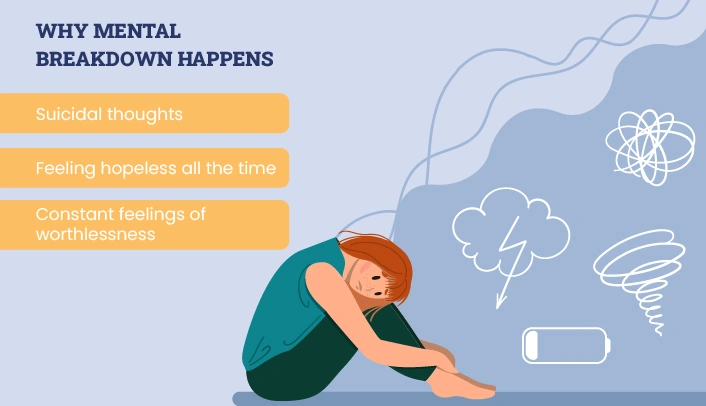
However, some warning signs should cause concern:
- Suicidal thoughts
- Feeling hopeless all the time
- Constant feelings of worthlessness
In the same way, emotional breakdown is a result of accumulated stress and emotional distress that becomes overwhelming. It leads an individual to struggle with daily tasks and interactions.
Cognitive difficulties, such as trouble focusing, or what is often referred to as “brain fog,” are dominant signs of emotional breakdown. These cognitive impairments can further hinder daily functioning by strengthening feelings of distress. More than one out of every four adults may experience a mental breakdown during their lifetime. Approximately 75% of adults have experienced high stress levels in recent months. In emotional and mental breakdown, chronic stress is a very significant factor.
The Importance of Mental and Emotional Health
Mental health primarily focuses on our cognitive processes and functioning, while emotional health centers on our ability to effectively manage and express feelings. They have different characteristics, and mental and emotional health are deeply related to one another. Our emotions can affect our thought processes, and vice versa. For example, constant negative thoughts can lead to feelings of sadness or anxiety. Similarly, intense emotions can cloud our judgment and decision-making abilities. Both are essential components of our overall well-being, and an imbalance in one can significantly impact the other.
What is the Difference Between Emotional and Mental Breakdowns?
A mental breakdown and an emotional breakdown are often viewed as similar, but they have important distinctions. A mental breakdown is generally characterized by extreme mental or emotional stress, causing difficulties in functioning normally. Symptoms can include anxiety, intense worry, fear, depression, constant hopelessness, or psychotic symptoms. On the other hand, an emotional breakdown mainly involves intense emotional distress. The symptoms are overwhelming sadness, frustration, anger, and feelings of worthlessness.
Although both require support and intervention, the key difference lies in the primary symptoms:
- Mental breakdown shows Cognitive Symptoms.
- Emotional breakdown shows Emotional responses.
Stages of Mental Breakdown
There are generally five stages of breakdown, which include mounting stress, escalating anxiety, social withdrawal, a crisis point, and recovery. Each looks different depending on the person, but the overall pattern tends to follow a consistent path.
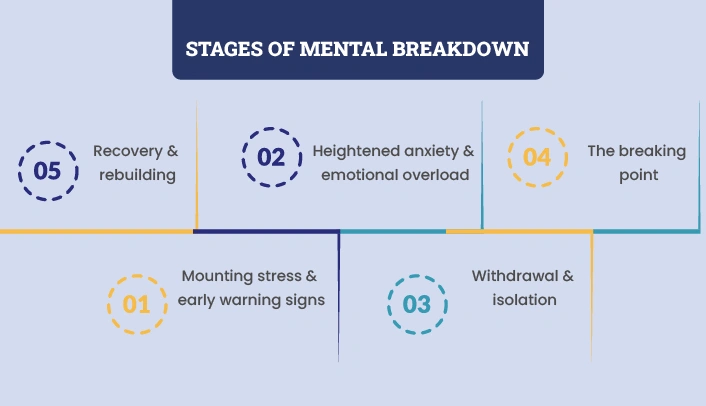
Stage 1: Mounting Stress & Early Warning Signs
The first stage often resembles ordinary stress that has lingered longer than expected. A person may notice they are more easily frustrated, sleeping poorly, or carrying physical tension in their shoulders, jaw, or chest. These symptoms are easy to brush aside because they mimic the effects of a demanding schedule.
Stage 2: Heightened Anxiety & Emotional Overload
During the second stage, the low-grade stress of Stage1 intensifies into persistent anxiety or emotional overwhelm.
Stage 3: Withdrawal & Isolation
By Stage 3, a person often begins to pull away from the people and activities that previously brought comfort or structure. They may cancel plans, stop returning phone calls, or miss work.
Stage 4: The Breaking Point
Stage 4 is the crisis itself. A person may feel entirely unable to function. Getting out of bed, maintaining hygiene, going to work, or caring for others can feel impossible.
Stage 5: Recovery & Rebuilding
Recovery does not happen overnight, but it does happen. With appropriate professional support, a person can begin to regain stability and build healthier ways of handling stress.
What are the Symptoms of Mental and Emotional Breakdown?
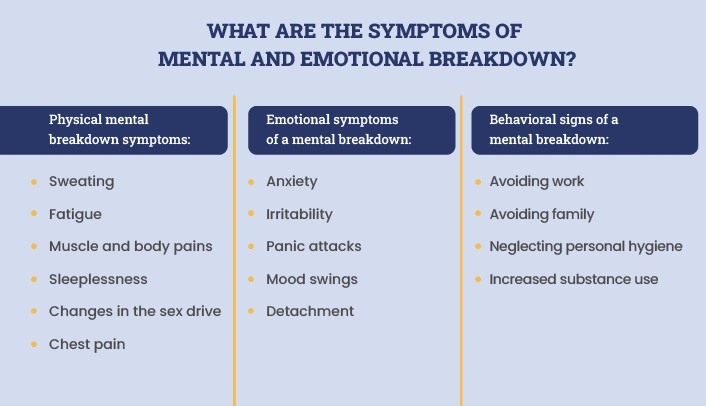
Here are some of the symptoms that can occur during a mental or emotional breakdown.
Cognitive symptoms of a mental breakdown:
- Difficulty focusing
- Lowered or a lack of decision-making
- Brain fog.
- Physical Mental Breakdown Symptoms:
- Sweating
- Fatigue
- Muscle and body pains
- Sleeplessness and other sleep disturbances
- Changes in the sex drive
- Bowel problems, like irritable bowel syndrome
- Chest pain.
Emotional Symptoms of a Mental Breakdown
- Anxiety
- Irritability
- Panic attacks
- Mood swings
- Detachment
Behavioral Signs of a Mental Breakdown:
- Avoiding studies, work, and other responsibilities
- Avoiding family and friends
- Neglecting personal hygiene and other needs
- Increased substance use.
How Can You Recognize The Signs of an Emotional Breakdown in Yourself?
A person may show off severe anxiety or uncontrollable depression, often feeling as if daily life has become overwhelming. You might notice significant withdrawal from activities they once enjoyed or even from social engagements.
Other signs to watch for include:
- Look for stress-related physical symptoms such as sleep disturbances, chest pains, or gastrointestinal discomfort. These can indicate underlying emotional struggles.
- Neglect of Personal Care
- Mood Changes
What are the Risk Factors of Mental and Emotional Breakdown?
Some life stressors can contribute to emotional breakdowns. Factors that may contribute to your intense reaction to stress include:
- An individual who has a personal or family history of depression or anxiety could be more prone to having a nervous breakdown.
- This could be from a genetic condition or from seeing a loved one go through the same experience at some point during their life.
- Having a psychiatric disorder gets worse due to ongoing events.
- Other risk factors include long-term illnesses or injuries that make everyday life more difficult to manage on one’s own.
What are the Causes of Mental and Emotional Breakdown?
Finding the cause of a mental breakdown and healing the contributing factors can be exhausting and challenging. However, successful treatment can restore quality of life and inner peace. Various reasons can initiate an emotional breakdown.
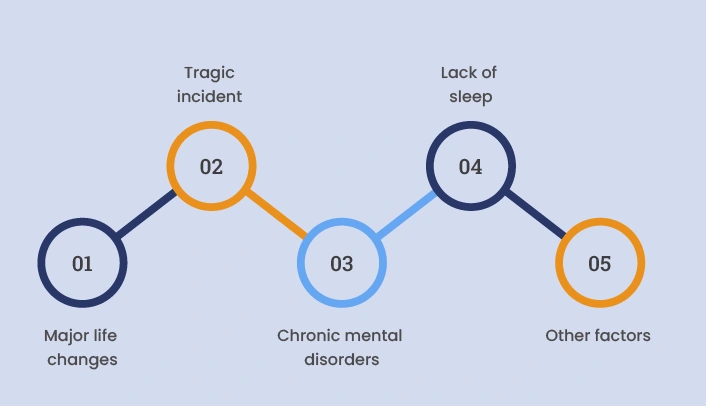
1. Major Life Changes
This could be anything from getting married or having a baby to leaving for college, going through a divorce, or moving to a new city.
2. Tragic Incident
Some common tragedies that could lead to mental breakdowns are losing a loved one, getting into a car accident, or being physically abused.
3. Chronic Mental Disorders
Major depression or anxiety that remains untreated may eventually result in a mental breakdown.
It can be stress at work or home: Also known as “burnout”, a person may get overwhelmed by the circumstances of their home or professional life.
4. Lack of Sleep
A lack of sleep can have many negative effects on a person’s mental well-being.
Recent severe personal tragedy, like the death of a loved one, divorce, foreclosure on a home, or other severe financial strain.
5. Other Factors
Ongoing work stress (burnout) or other work-or school-related problems can also make one prone to mental or emotional breakdown. Chronic medical conditions or the worsening of a medical condition also contribute to this.
What is the Connection Between Emotional Abuse & Mental Breakdown?
Emotional abuse is a type of abuse that can occur in any relationship by using words, actions, or behaviors to control, manipulate, or degrade another person. It can take many forms, from subtle comments to overt threats. Abuse can leave lasting scars on a person’s mental and emotional well-being. People use emotional abuse to frighten, control, or isolate others.
This type of abuse doesn’t involve physical violence, though it might involve threats of violence directed toward you or your loved ones. The person who is abusing could be a spouse or partner, but it can also be a manager, parent, caretaker, or even adult parent.
Emotional abuse can contribute to a mental breakdown because:
- Thecontinuous emotional harm keeps the body and mind under pressure without recovery.
- Repeated criticism or manipulation may make a person feel powerless, trapped, or worthless.
- Most of the emotionally abusive situations involve cutting the person off from emotional safety and validation.
- The brain may begin reacting as if danger is constant, leading to burnout, anxiety disorders, depression, or trauma-related symptoms.
- When emotional pain exceeds a person’s ability to process it, functioning can temporarily collapse.
What is the Difference Between Mental, Emotional, and Nervous Breakdowns?
The term nervous breakdown refers to a range of mental health crises related to stress, which causes a person to be unable to function normally, and is often used interchangeably with terms like mental breakdown or psycho breakdown. A mental breakdown happens when overwhelming stress makes it hard to function in daily life. You may feel like you can’t cope, and even everyday tasks like getting out of bed or going to work can feel impossible.
A “nervous breakdown” refers to the feeling of being physically, mentally, and emotionally overwhelmed by the stress of life. Moreover, a mental health crisis or a breakdown of mental health is a situation that happens when an individual has intense physical and emotional stress. It causes difficulty with coping, and people in this state are unable to function effectively. It’s the feeling of being physically, mentally, and emotionally overwhelmed by the stress of life.
Note: Remember that the term “mental breakdown” or “nervous breakdown” doesn’t refer to one single mental health condition. This means the help of a behavioral health professional is necessary to identify which condition is the root cause of an individual’s symptoms. Once the causes of the symptoms have been properly diagnosed, individual treatment and recovery plans can be started.
Treatment Approaches
Mental breakdowns are usually short-lived and can be treated with therapy or medication.
Here is what you can do to deal with an emotional breakdown and return to your normal life:
The overall goal is to help equip individuals with the long-term treatments & skills necessary to get back to their lives by living healthier. Certain levels of treatment to expect for this condition may be:
Medication Management
Medication management is an important part of the recovery process, helping to balance the brain’s chemistry and alleviate symptoms of mental health conditions. Psychiatry uses medications like antidepressants, anti-anxiety drugs, and sleep aids, differing from talk therapy’s focus on emotional issues.
Individual Therapy
Individual therapy, also known as one-on-one therapy or counseling, involves private era sessions between an individual and a trained therapist.
- One-on-one sessions
- Uncovering underlying issues
Group Therapy
Typically, a small supportive and structured environment where a group of people, led by a trained mental health therapist, share their experiences, inner thoughts, and emotions.
- Share experiences
- Learn from others
- Professional assessment
- Close monitoring for adjustments if and or when needed
Psychoeducation
Through educational sessions, individuals gain a deeper understanding of their challenges.
Gives individuals an understanding of their condition
Empowers individuals to understand and recognize early warning signs
Reach out for support: You do not have to go through this challenge on your own. Talk to your friends and relatives, let them know what you are struggling with, and ask for help. Sometimes, a listening ear and a word of encouragement are enough to start the recovery.
Take the First Step Toward Healing at Advance Health Preference Group
When mental breakdown gets to you, and everything feels overwhelming, remember you are not alone.
The Advance Health Preference Group is here for you. Our expert team of psychotherapists and psychiatrists understands how distressing this can feel for you. We provide personalized recovery plans so that you can regain stability and resilience. Our expert team helps you by providing a safe and nurturing environment where you can talk about your issue without the fear of judgment. You can also get treatments virtually through our telepsychiatric services.
Book your appointments now!
Last Remarks
When considering nervous, emotional, or mental breakdown, the main differences involve duration, intensity of physical symptoms, and whether functioning in daily life is disrupted.
No matter what term is used, whether psychotic breakdown or nervous breakdown, the experience is a serious crisis that requires treatment and support. Building a support system by communicating with trusted friends or family members can alleviate feelings of isolation. Talking through struggles fosters connection and shared understanding.
Frequently Asked Questions
Professional intervention from therapists or mental health counselors is important. They offer specialized strategies for managing symptoms and starting the path to recovery. Engaging with a professional can lead to better outcomes and understanding.