


Last updated : April 20, 2026 | Written & Reviewed by Advanced Team
Why Does Depression Keep You Awake at Night?
Many people have trouble sleeping at night due to feelings of depression and sadness. This condition can worsen when it is quite and you are alone. Understanding why depression keeps you awake at night is a complex thing. It involves the biological factors, the interplay of personal circumstances, and the effect of modern life on our natural rhythm.
Repetitive negative thoughts and rumination significantly cause sad feelings at nmight. Additionally, our circadian rhythm, which causes mood shifts during the daytime, can lead to lower mood at night. Moreover, excessive exposure to artificial lights and disrupted sleep patterns make it worse. It makes some individuals more sensitive to mood disorders. You need to understand that, if depression is keeping you awake at night, it is not normal. It can worsen over time if not treated on time with the support of mental health professionals.
What is Depression at Night?
Depression at night is not a separate subtype of depression, but it represents exaggerated symptoms at night. After everyday tasks, many individuals feel more sluggish, fatigued, and less interested in enjoyable activities in the evening. Some may fear going home from work or school due to an unstable home environment. Some nighttime depression factors are situational and can be reduced by a change in action and environment. It can be like leaving a toxic relationship or moving away from an abusive family member, causing depression. However, other factors are not reduced with seasonal changes.
Why Do You Feel Depressed At Night?
Here are various factors that make depression worse at night, which include,
1. Social Isolation
Individuals with depression may keep their minds busy in the daytime, surrounded by others. However, once they are back home and miss out on social interactions, it leads to feelings of loneliness and depression at night. The chances are higher if they live alone or don’t get along with friends and family.
2. Anergia
The most common symptom of depression is anergia, when a person constantly feels exhausted. Individuals may have difficulty completing their activities during the daytime, which can worsen at night after a long day.
3. Fewer Distraction
Negative thoughts and emotions can take over your mind at night without daily activities, work or social interactions. The lack of distractions increases the intensity of negative feelings.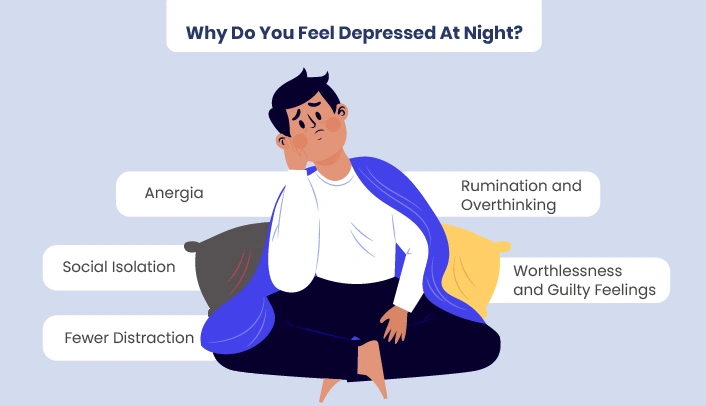
4. Rumination and Overthinking
At nighttime, when you have a quiet space, people often replay negative events, worry about the next day’s tasks, or overthink the future. This negative habit of overthinking and intense worries can worsen depression at night.
5. Worthlessness and Guilty Feelings
Many people with depression feel as though they are not enough. It leads to feeling guilty about what they were unable to accomplish during the day. At night, they ruminate or obsess over their failures throughout the day. This leads to overthinking, insomnia, depression, and anxiety at nighttime.
How Does Lack of Sleep Affect Depression?
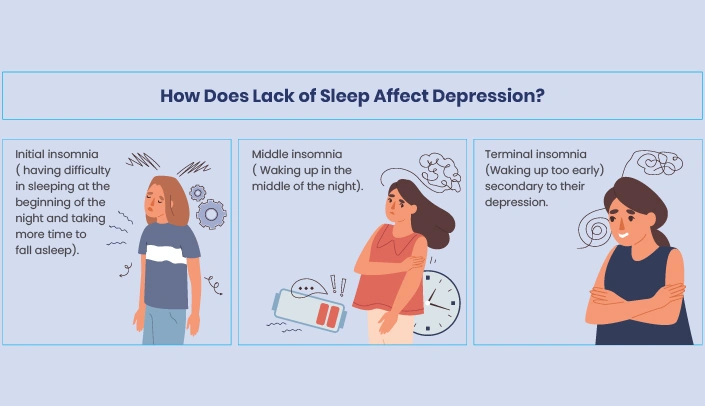
The most common problem of people with depression is lack of sleep, which worsens their depression. They may suffer from the following,
- Initial insomnia ( having difficulty in sleeping at the beginning of the night and taking more time to fall asleep).
- Middle insomnia ( Waking up in the middle of the night).
- Terminal insomnia (Waking up too early) secondary to their depression.
Any of these insomnias can cause lack of sleep, which can exacerbate depression. Some people with persistent insomnia also worry about their sleeping schedule and how it impacts their mood, productivity, and functionality the next day. This repetitive cycle can result in more stress and worry, and worsens insomnia. When the stress of not sleeping is combined with worries make depression symptoms worse and harder to manage.
Common Sleep Problems Associated with Depression?
Some of the following sleep problems may cause depression. The possibility is that some of them have the same underlying neurological or genetic causes as depression and other mood disorders.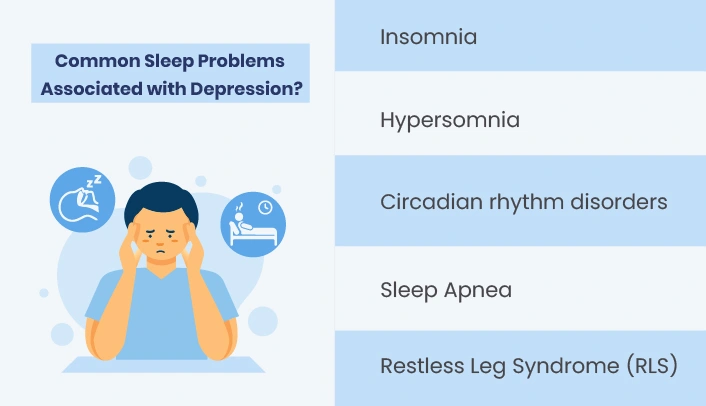
1. Insomnia
Insomnia is a condition in which one has difficulty falling asleep or staying asleep. According to the studies, somewhere between 80%-90% of people with depression also experience co-occurring insomnia. Dealing with insomnia also increases your risk of developing depression.
2. Hypersomnia
In Hypersomnia, you feel excessive sleepiness. You experience a hard time staying alert during the day with this condition, even if you get enough sleep at night. In fact, you might even sleep longer than you would normally. People with this sleep disorder often deal with depressive symptoms. Individuals with depression generally struggle with excessive sleepiness during the daytime.
3. Circadian rhythm disorders
It is identified with your internal clock, causing disturbed sleep patterns. Some of these disorders are directly linked to depression. Our circadian rhythm can be affected by seasonal changes, as it shifts the amount of daylight. Circadian rhythm impacts how you sleep and how long you sleep. There is a distinct subtype of depression named Seasonal Affective Disorder, which is due to the change in our circadian rhythm, neurotransmitter dysregulation, and some genetic predispositions.
4. Sleep Apnea
Sleep apnea is a type of sleep disorder. Its symptoms involved pauses in breathing or shallow breathing. Most of the people with sleep apnea experience depression. However, the symptoms for the condition can be similar, such as lack of concentration or fatigue, which can result in misdiagnosis. The more severe your sleep apnea is, the more you experience depression symptoms as well.
5. Restless Leg Syndrome (RLS)
Restless legs syndrome is a neurological disorder in which you move your legs because of uncomfortable sensations. These sensations can be like tingling or aching in your limbs and can affect your sleep and mood.
Effects of Depression At Night on Daily Life
Depression at night causes lack of sleep (insomnia). The combination of these two conditions creates an exhausting and draining cycle. Poor sleep makes it harder to perform everyday responsibilities and engage with family. Sleep deprivation is the reason for decreased focus, slowed reaction times, and a reduced ability to cope with stress.
Additionally, depression drains energy, making it hard to maintain a balanced routine that is good for better sleep. It also affects social interactions, as individuals feel fatigue or low mood, leading to isolation. The immune system can be weak due to insomnia, increasing the chances of these people being vulnerable to illness. This condition can worsen mood and energy levels.
The depression and insomnia combination not only disturbs productivity, but it also changes daily life experiences. Tasks that were manageable before now feel overwhelming, which increases feelings of hopelessness.
How to Deal with Nighttime Depression
If you are dealing with nighttime depression, you need help from a mental health professional. These specialists will help you overcome depression with effective treatment. The following are the effective treatments for nighttime depression and other mental health conditions.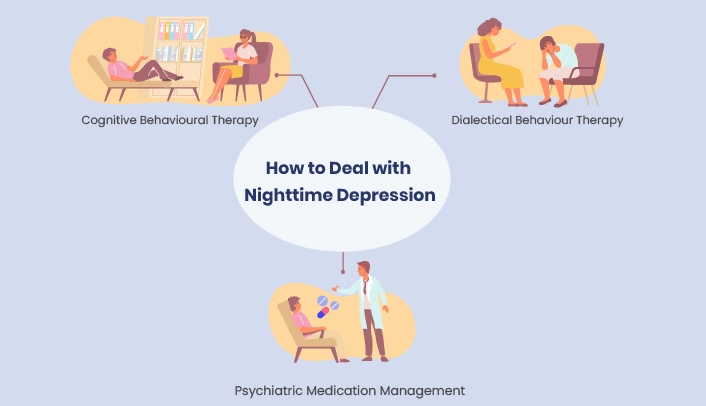
1. Cognitive Behavioural Therapy (CBT)
CBT is the most effective therapy to treat depression and insomnia. Usually, it takes up to 4 to 8 sessions to completely overcome the symptoms. These sessions can be scheduled every week or every two weeks, depending on the person’s mental condition. Cognitive behavioural therapy (CBT) is used to treat patients with different methods. It looks at the behaviours, thoughts, and other things that cause depression and insomnia. The main parts of CBT are:
- Education: People learn about their depression and co-occurring insomnia.
- Behavioural interventions: Learn how to change habits to improve sleep.
- Cognitive interventions: Managing and changing thoughts that cause depression at night.
2. Dialectical Behaviour Therapy (DBT)
Dialectical Behaviour Therapy is one of the best forms of talk therapy for those experiencing depression and insomnia. It is based on CBT but adapted for people who are feeling intense depression.
DBT aims to help you:
- Understand and accept difficult thoughts causing depression.
- Teaches skills, how to manage these thoughts and emotions.
- Make it possible to make positive changes in your lifestyle.
3. Psychiatric Medication Management
It is overwhelming to take psychiatric medications for a long period. You can take the medication management service from your psychiatrist to get the best out of your prescription. It involves guidance to manage multiple medications to overcome any mental health condition. Whenever you start taking psychiatric medications, consider a psychiatric medication management service for better results.
When to Seek Help for Depression at Night?
If depression at nighttime is disturbing your daily functioning, it is time to seek support from a professional. Symptoms that indicate you need support from a mental health specialist include:
- Consistent hopelessness and sadness that become worse at night.
- Difficulty in sleeping due to depressive thoughts and feelings.
- Loss of interest in fun activities, or withdrawal from friends and family.
- Extreme feelings of panic, anxiety, or feelings of loneliness at nighttime.
Overcome Nighttime Depression with the Advanced Health Preference Group
Seeking help shows your strength, and support is always available. It makes you feel isolated to experience depression at night, but don’t worry, no need to go through it alone. You can take a meaningful step towards feeling better by seeking mental health care support from Advanced Health Preference Group. We have expert psychiatrists who help you with personalised strategies to overcome depression. Get our trustworthy services and improve your mental health. Our psychiatric medication management, therapies, and other professional services are the best. Book your appointment and make a significant difference in managing depression at night.