


Last updated : June 2, 2025 | Written & Reviewed by Advanced Team
How to cope with Anxiety?
To overcome anxiety, you should follow a healthy lifestyle, use relaxation techniques, and engage in physical activities. If it’s not treated properly, with time, it can be challenging to control, but fortunately, it can be cured.
Some of the strategies to overcome anxiety are listed below:
–Healthy lifestyle:
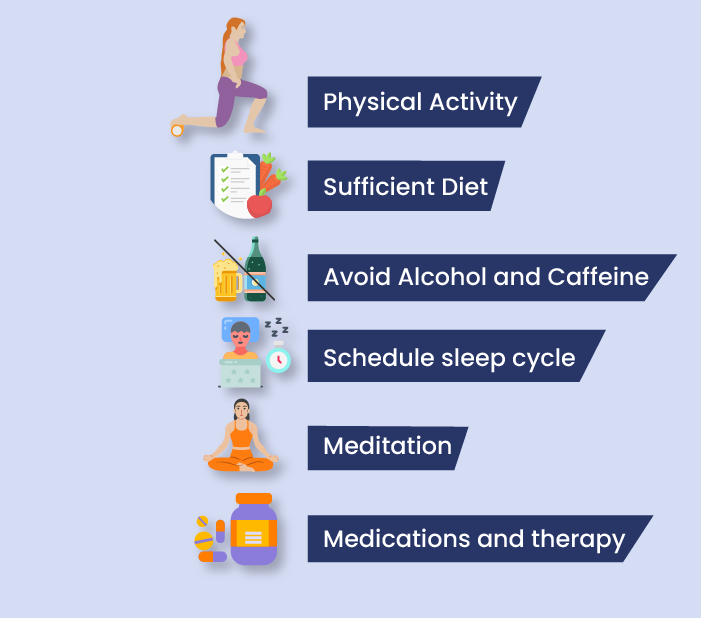
1. Physical Activity:
Morning walk, exercise, or yoga can help reduce stress and lead to a joyful mood. Sometimes deep breathing can make you feel relaxed as it slows down the heart rate in a progressive manner and can help ease and relaxation.
2. Sufficient Diet:
Eating a healthy and enriched diet that includes proteins, carbohydrates, calcium, and fiber can lead to a boost up energy and good mood.
3. Avoid Alcohol and Caffeine:
The use of alcohol and drugs can trigger or worsen anxiety. Try to avoid or, in case you are addicted, you can use bubble gum instead of alcoholic products.
4. Social Interactions:
Spending quality time with your loved ones can help prevent the feeling of loneliness and overthinking. Communicating and socializing can bring laughter and ease. Talking about the feelings or things that are bothering you can make you feel calm.
5. Schedule sleep cycle:
Prioritize your sleep as it will help you in your overall well-being as well as a healthy lifestyle. Balanced life cycle sleep will promote relaxation, and it will give you energy to overcome the feeling of anxiety and restlessness. A sufficient energy level will help in completing daily tasks more efficiently.
–Adopt the following skills for relaxation:
1. Journaling:
Habit of writing about your feelings and experiences that have a bad impact on your mental health can help to manage your stress level and can result in relaxation.
2. Meditation:
Practicing daily meditation will help in calming the mind and body, and it will help in a healthy lifestyle. Focusing on the present or any specific object will help you to avoid thinking about the past and gathering up the negative clutter of thoughts. It promotes the ability to manage your stress and emotions.
3. Identify Triggers:
Find out the things, situations, or emotions that trigger your anxiety. It will help to recognize your triggers and give you the potential to be prepared for such situations.
4. Learn about your disorder:
Before consulting a professional, you should have some research about your illness. You should figure out how, why, and when your mental health affects your overall attitude.
5. Practice Gratitude:
Practicing gratitude will encourage you to forget about the negative thoughts. It will help to appreciate the good things you have in life.
Professional Help:
If any of the above-mentioned techniques and strategies to overcome anxiety are not working, you should seek professional help.
Medications and therapy:
Taking antidepressants can calm the mind by reducing anxiety. Use the medications as prescribed by the mental health consultant gradually it will help in a big change in your personality. Consulting a mental health therapist will help you fight up with the things that are triggering your anxiety. It will help to confront fears and will develop confidence. Research has proved that Cognitive behavioral therapy and Dialectical behavioral therapy can also help in relaxation and boosting mood.
Professional Mental Assistance at Advanced Health Preference Group
Advanced Health Preference Group is a platform that provides services to people suffering from mental health issues like panic disorders, mood disorders, depression, and anxiety. We have professional mental health providers who can help you overcome your mental issues. If someone you know is dealing with anxiety, we can help. We offer treatment options that are designed to support their mental health and help them feel better