

Last updated : June 15, 2026 | Written & Reviewed by Advanced Team
What are Stress Hormones and How Do They Impact Mental Health?
Feeling stressed is a common thing when handling work deadlines and family responsibilities. Although a little stress can help you stay focused to complete your responsibilities, chronic stress is different. When you experience stress for a long time, it starts to impact your brain function. Stress hormones are chemical messengers released in your body in response to your psychological challenges.
Let’s understand what stress hormones are, how they affect your mental health, and how you can regain your mental health and balance in your life.
How to Define Stress Hormones?
Stress hormones are actually chemical messengers released in our body in reaction to mental stress and triggers flight ot fight response. Our bodies release hormones, such as epinephrine, cortisol, and norepinephrine, when we feel stressed. Moreover, these hormones function to help us manage stress by increasing blood sugar, blood pressure, and heart rate. However, chronic stress can negatively affect our health.
What are the 3 Stress Hormones?
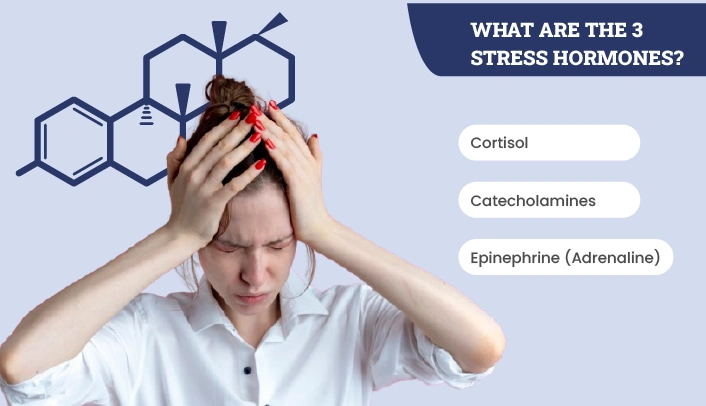
Here are 3 main hormones released from our bodies when we experience stress.
Cortisol
Cortisol is one of the main stress hormones in our body. Adrenal glands release this steroid hormone in response to stress. It can have various negative impacts on the body. It is released in the bloodstream in small amounts but more constantly. The reason behind this is that this hormone is involved in the long-term stress response in the body.
Cortisol plays multiple functions, but its major role is to help the body respond to stress. It manages stress by boosting energy production and increasing blood sugar levels. Moreover, it also suppresses unnecessary functions like immunity, reproduction, and digestion. This allows the body to use the energy on something else that needs attention. Indeed, it is an essential hormone, but if its levels are constantly high in your body, it may cause you to gain weight, anxiety, depression, and many other health issues.
Stress Hormone Cortisol and Weight Gain
Chronic stress can increase the cortisol hormone. Chronic stress produces an excessive amount of stress hormones in the body. It causes the body to gain weight by making the individual crave high-calorie foods. Moreover, it deposits excess fat in the stomach area because of high insulin levels and metabolic changes that make it difficult to burn fat.
Catecholamines
Catecholamines are a group of hormones such as norepinephrine, epinephrine, and dopamine. These hormones work as neurotransmitters in the body. They send signals between nerve cells (neurons), which help the body respond to stress.
Catecholamines are released in large bursts in response to stress and help to increase heart rate, blood pressure, and blood sugar levels. Moreover, they also play a role in the “fight or flight” response. It is the natural way of our body to deal with perceived threats. The following are the hormones involved in the catecholamine group.
Epinephrine (Adrenaline)
Epinephrine is the hormone that is most connected to the “fight or flight” response. It is released in large amounts and affects the body in various ways, such as increasing blood pressure and heart rate.
Further, it also boosts blood flow to muscles and energy production. While this hormone can be helpful in short-term situations, too much can result in irritability, anxiety, and difficulty sleeping.
Norepinephrine (Noradrenaline)
Norepinephrine is the same as epinephrine but is released in small amounts. It also affects the body in various ways, such as increasing blood pressure. Moreover, it also boosts attentiveness and alertness. Norepinephrine is produced from dopamine in the human body. Too much norepinephrine can cause irritability, difficulty sleeping, anxiety, and depression.
Dopamine
Dopamine is known as a neurotransmitter. It plays a role in pleasure, motivation, and mood. It is released when we do something that feels good, and it is also called the reward hormone. Moreover, this hormone is also involved in stress response. It drives the reward system, regulates voluntary movements, and heavily control your attention and learning. It is necessary to handle stress as it allows adaptation to various environmental provocations.
Vasopressin
Vesopressin is a hormone involved in the regulation of blood pressure and fluid metabolism. This hormone is referred to as an antidiuretic hormone. Vasopressin is synthesized in the hypothalamus region of the brain and stored in the pituitary gland, which is located beneath the brain. In cases where we undergo psychological and physical stress, the vasopressin hormone will be secreted into the bloodstream. The hormone binds to the receptors of the blood vessels and causes the constriction of the blood vessels. This results in an increased blood pressure level. Vasopressin also stimulates the reabsorption of more water from the urine by the kidneys. This leads to the formation of fewer amounts of urine.
High Stress Hormone Levels Symptoms
High stress hormone levels are helpful in short bursts, but continuous stress can lead to mental and physical health problems.
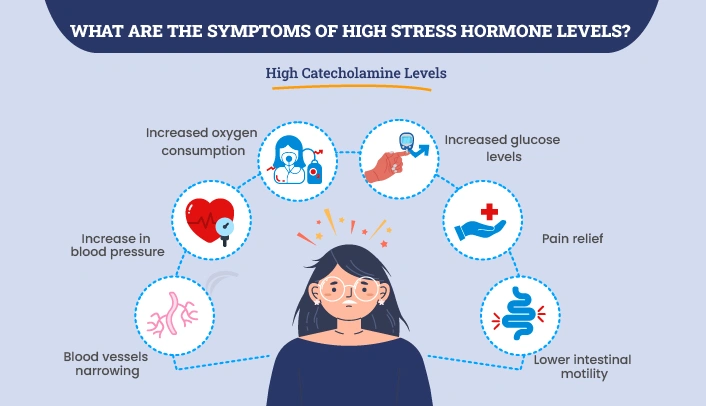
High Catecholamine Levels
SAM Axis, which stands for Sympatho-Adrenal-Medulla, refers to a first-line defense response to immediate stress that activates the body’s “fight or flight” response within seconds. When the SAM Axis is activated, it temporarily elevates the level of hormones called epinephrine and norepinephrine. These two hormones are capable of producing several effects, such as:
- Blood vessels narrowing
- Increase in blood pressure
- Cardiac output and heart rate increase
- Widens the airways in the lungs
- Increased oxygen consumption
- Increased sodium retention
- Increased glucose levels
- Lower intestinal motility
- Pain relief
- Increased alertness and arousal
High Cortisol levels
The hypothalamic-pituitary-adrenal (HPA) axis plays an important role in the regulation of the body’s reaction to stress and maintenance of homeostasis. Constant stimulation of the HPA axis results in elevated cortisol in the bloodstream.
Some diseases may be associated with elevated cortisol. Therefore, the signs of elevated cortisol may differ based on the causes. Certain common signs and complications associated with excess cortisol include:
- Weight gain, especially in the abdomen, upper back, and face.
- High blood pressure.
- Muscle Weakness.
- Osteoporosis.
- Diabetes.
How Chronic Exposure to Stress Hormones Impacts Mental Health
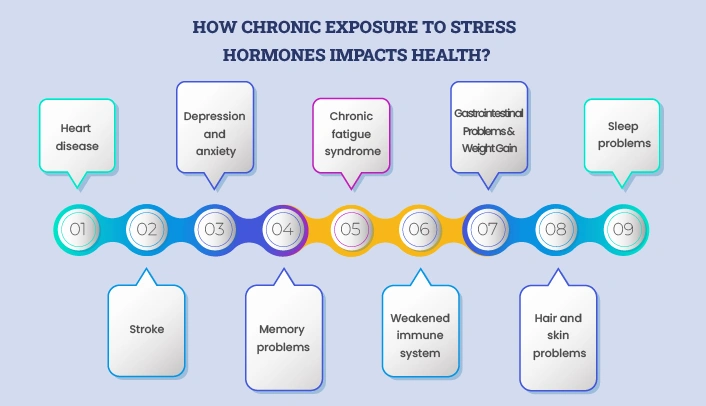
People usually know that stress is bad for them, but don’t understand the damage it can do. Stress hormones can cause various damage in the body, and chronic exposure to stress can be the reason for many health issues.
Heart Disease
Stress has been associated with increasing the probability of developing heart diseases. This is because prolonged exposure to stress causes hypertension and abnormal heart rhythms. Furthermore, high levels of cortisol can be damaging to the arteries and result in the accumulation of plaques.
Stroke
Strokes are among the most damaging health problems that result from constant or chronic stress. During stress, blood vessels are restricted to preserve energy in the body. However, the restriction of these blood vessels may lead to the accumulation of plaques, thus causing blockages that may lead to strokes.
Depression and Anxiety
Depression and anxiety are two common health disorders that often occur together. Many people who experience depression also suffer from anxiety and vice versa. Though the specific cause behind such disorders remains unclear, it is widely accepted that both disorders develop due to a combination of several factors. These factors are like genetics, biology, psychology, and the environment.
Stress is another factor believed to contribute to these disorders and exacerbate their symptoms. It affects how the brain processes chemicals like serotonin, an important component for regulating moods. It also has the potential to affect other bodily functions, including endocrine and immune function.
Memory Problems, Cognitive Decline, and Brain Fog
Cognitive decline and memory problems are another impact of chronic stress. This is due to the fact that when we are under stress, our brain releases cortisol. It may even end up killing brain cells. Moreover, the role of cortisol in the inhibition of the creation of new memories. Stress makes it difficult to remember information and focus on tasks. Over time, this can result in serious problems with memory loss and cognitive health.
Chronic Fatigue Syndrome (CFS)
Chronic fatigue syndrome (CFS) refers to an extreme tiredness that does not improve with rest. People with CFS can also have some other symptoms. These can be a memory problem or difficulty concentrating. The exact reason for CFS is not known, but chronic stress can be one of the reasons.
Weakened Immune System
Constant exposure to the hormones released during times of stress might lower your immunity levels. It increases the chances of catching colds or viral and bacterial infections. These stress hormones act as neurotransmitters that allow the cells of our body to communicate. Moreover, the same hormones could disrupt the process of communication among our immune cells or improperly distribute nutrients in our body intended for our protection. This would result in reduced effectiveness of our immune system.
Sleep problems
Insomnia is one of the most common effects of chronic stress. When the body is under stress, it remains in a heightened state of alertness, making it difficult to relax and fall asleep. Stress hormones such as cortisol can also disrupt normal sleep patterns by causing frequent awakenings throughout the night.
As a result, poor sleep can lead to daytime fatigue, which may further increase stress levels and create a difficult cycle to escape. Chronic sleep deprivation can also have serious consequences, including reduced cognitive performance, a higher risk of accidents and injuries, and a weakened immune system. In addition, ongoing sleep problems may contribute to or worsen mental health conditions such as anxiety and depression.
When to Seek Professional Support
If you experience constant fatigue, memory problems, or are unable to manage daily tasks, it is time to seek support from your psychiatrist. Your mental health provider will help you recognize the reason for stress, and the symptoms will reduce with the right treatment. Medical support in chronic stress is necessary to get back to a healthier and calmer life.
How to Balance Stress Hormones
When experiencing chronic stress, seek help from a professional mental health provider. They will recommend personalized therapy treatments to reduce the stress hormones in the body. One of the most effective treatments to reduce stress is psychotherapy, for example, Cognitive Behavioral Therapy (CBT).
Cognitive Behavioral Therapy to Treat Chronic Stress
Cognitive Behavioral Therapy (CBT) helps reduce the levels of stress hormones such as cortisol through training the brain to handle stress, which makes the amygdala calm and builds the prefrontal cortex. The amygdala is the brain’s primary processing center for emotions. CBT works effectively in reducing chronic stress through the identification of negative thought patterns and the use of strategies such as mindfulness, deep breathing, and behavior change to prevent fight-or-flight reactions.
How Does CBT Help to Balance Stress Hormones
- Physiological Impact of CBT: Some researchers have found that CBT can result in physical changes in the brain, lowering the pressure of chronic stress on one’s body.
- Cortisol Habituation: Researchers have found that CBT enhances HPA axis habituation.
- Relative Stressors: CBT works on the mind to interpret threats.
Reduce Stress at Advanced Health Preference Group.
At Advanced Health Preference Group, we treat your mental health conditions. If you or anyone from your family is experiencing chronic stress, then we are here to help you. Our mental health professionals specialize in treating all types of mental health disorders. They carefully consider each individual’s conditions and develop a personalized treatment plan. Moreover, we also offer telepsychiatry services so everyone can have access to mental health treatment from the comforts of their home. We also accept insurance, as we collaborate with multiple insurance companies.
Schedule a consultation with our professional mental health providers today and regain your healthy life.