

Last updated : June 8, 2026 | Written & Reviewed by Advanced Team
Emotional Dysregulation: Signs, Examples, and What It Feels Like
Emotions are a natural part of human beings. But for some people, feelings don’t just pass. They arrive with an intensity that feels impossible to manage, and the effects can disrupt relationships, work, and daily life. People call this experience emotional dysregulation, and it happens more often than many people realize.
Emotional dysregulation is different from a typical mood swing, which is often a more gradual shift. It refers to difficulty managing the intensity, duration, or expression of emotions in ways that feel inconsistent with a situation.
There is not a standalone diagnosis in the Diagnostic and Statistical Manual of Mental Disorders, Fifth Edition (DSM-5), but its signs resemble many other mental health conditions, including Borderline Personality Disorder (BPD), Post-traumatic stress disorder (PTSD), Attention Deficit Hyperactivity Disorder (ADHD), and Obsessive Compulsive Disorder (OCD).
What is Emotional Dysregulation?
Emotional dysregulation, also called affect dysregulation, refers to the difficulty managing emotional responses as the situation actually demands. It’s basically an inability to regularly use healthy strategies to diffuse or moderate negative emotions, often in ways that feel out of control while facing the situation. If left untreated, it can significantly interfere with a person’s ability to live a fulfilling, effective life.
A study of Borderline Personality Disorder, named the biosocial theory, declares that difficulties regulating emotions are rooted in biological preconceptions, which are exacerbated by specific environmental experiences.
Symptoms
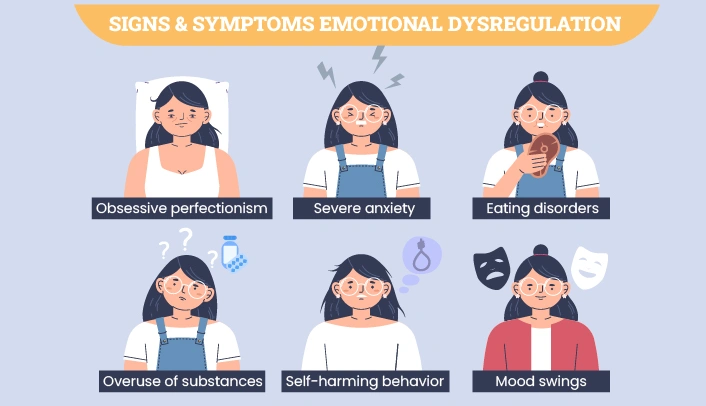
This condition can influence feelings, speech, and behavior. Common signs or symptoms include:
- Severe anxiety or constant depression
- Devastating emotions of anger or irritation
- Mood swings that change frequently and without any clear reason
- Self-harming behavior
- Destroying feelings of embarrassment or worthlessness
- Overuse of substances as a way to handle a situation
- Dangerous or premature sexual behavior
- Obsessive perfectionism
- Suicidal attempts
- Eating disorders
- Constant problems in interpersonal relationships
Physical Signs
It has been noticed in many people who don’t relate their physical symptoms to emotional dysregulation. Your body keeps struggling even when your mind has learned to suppress what you’re feeling. Chronic muscle tension, especially in the jaw, neck, and shoulders, is often a sign of this condition. Issues related to digestion, headaches, fatigue, and sleep disturbances frequently result in dysregulation.
The following are 5 categories of signs that may indicate this condition
➢ Emotional intensity: Emotions feel overwhelming even with minor triggers, making reactions seem disproportionate to the actual situation at hand.
➢ Rapid shifts in mood: Emotions change quickly and unpredictably, straining relationships and making everyday social interactions exhausting.
➢ Difficulty calming: Some time is needed to return to baseline after emotional arousal, even following minor upsets or small frustrations.
➢ Negative self-image: Shame and guilt compound the struggles, reinforcing beliefs like ‘I am too much’ or ‘I cannot control myself.’
➢ Chronic stress & burnout: Repeated emotional struggles reduce the ability to pursue.
Examples of Emotional Dysregulation
We see examples of this condition usually in everyday moments that feel much more difficult than they should. Some examples include:
- Shouting at a partner over an insignificant misunderstanding and being unable to calm down.
- Little feedback at work results in crying for several hours.
- Resigning from a job or breaking off from a relationship after one unpleasant interaction.
- Feeling angry while sitting in traffic.
- Complete social distancing and being responsive during any emotional conflict.
Although these situations can feel intense at the moment, many people experience them daily.
What does Emotional Dysregulation feel like?
Emotional dysregulation is basically the feeling of being unable to manage emotions in response to an unpleasant situation. Stressed-out feelings, reactive, or incapable of calming down after becoming upset, are the feelings represented while having emotional dysregulation. These feelings come up with intense anger, anxiety, sadness, or shame that stays longer than expected.
Moreover, it’s a state of confusion or uncontrollable anger that can also come up as a result.
How Common is Emotional Dysregulation?
According to Research published in the American Journal of Psychiatry, emotional dysregulation is a potential fourth main symptom of ADHD, alongside some other symptoms, like inattention, hyperactivity, and impulsivity. Emotional dysregulation has long lain at the core of borderline personality disorder, which is present in over 50% of those who are psychiatrically hospitalized and 4 to 6% of the general population. This condition is more dominant in females and teens compared to males.
Emotional Dysregulation In Adults
Emotional dysregulation in adults often arises as covert struggles behind flawlessness, working capacity, and rigid control rather than visible outbursts. People in this condition are often distressed, which interferes with relationships, performance of work, and mental state. They may get severe symptoms more often and for longer periods. Individuals undergoing this condition dysregulation lack significant skills.
It may also appear in conjunction with behavioural dysregulation. It can occur as facing problems, emotional reactions, including self-injurious behavior, suicidal ideation and attempts, regular substance use, and impulsivity. In adults, this condition is described as the inability to manage or regulate emotional reactions healthily. Individuals work hard to manage emotions, which leads them to experience drastic mood swings, complications in controlling reactions to stress, or overwhelming feelings of anger, sadness, or anxiety.
However, this can often lead to emotional distress, relationship difficulties, or a sense of being “stuck” in vigorous emotions.
How Emotional Dysregulation Appears in Children?
This condition in children is also a serious concern. It often looks like big feelings that don’t match the situation, may last longer than expected, or seem impossible to recover from.
For example, A toddler throws themselves on the floor of a shopping store because you won’t buy the cereal they want; that’s developmentally normal.
However, young children are still developing their cognitive patterns, and their brain structure is needed to manage emotions. The prefrontal cortex, the brain region responsible for impulse control and rational thinking, won’t fully develop until the mid-twenties. This means they genuinely lack the internal mechanisms that adults take for granted. They don’t choose to overreact; it’s because their brains aren’t yet habituated to pause, assess, and respond calmly.
Is There a Connection between ADHD & Emotional Dysregulation?
ADHD affects the brain’s capacity to regulate attention, impulse control, and emotional responses together. Research published in the American Journal of Psychiatry identifies emotional dysregulation as a potential fourth core symptom of ADHD, alongside inattention, hyperactivity, and impulsivity. Adults and children with ADHD commonly experience frustration, intolerance, and intense irritability as central features of the condition.
What are the Causes of Emotional Dysregulation?
Emotional dysregulation is not a condition in itself. Many people struggling with mental illness experience some sort of difficulty managing and expressing emotion, and for some, that difficulty is severe. Common causes and contributing factors include:
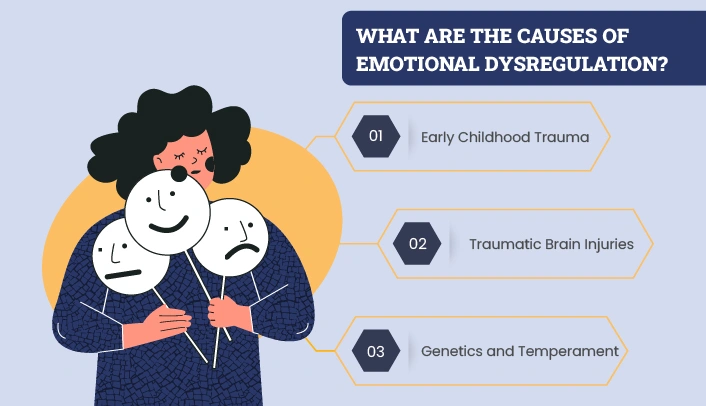
1. Early Childhood Trauma
Early childhood trauma is a leading public health factor that disrupts a child’s capacity to build healthy emotional regulation circuits. Neglect or inconsistent caregiving during childhood can lead to emotional dysregulation.
2. Traumatic Brain Injuries (TBI):
Traumatic brain injury (TBI) is an alteration in brain function caused by an external force to the head. Many types of neuropsychiatric symptoms can develop after TBI, including mood changes, personality changes, psychosis, sleep changes, or changes in one’s ability to regulate behavior and emotion.
3. Genetics and Temperament
Genetics plays a major role in the development of mental disorders, and temperament plays a crucial role as well. For example, someone repeatedly tells a person that their emotions are wrong, excessive, or unacceptable, which causes extreme personal invalidation. Attachment disruption in early childhood matters too. Young children learn to regulate emotions through co-regulation with caregivers. Children who suffered in childhood and experienced a lack of love and attention may never fully develop the inner mechanisms to manage emotions independently.
These causes don’t exist in isolation. A person with a genetic predisposition toward emotional sensitivity who also experiences early trauma and has undiagnosed ADHD faces compounding challenges. Understanding your specific contributing factors can help guide the most effective approach to building regulation skills.
What are the Mental Health Conditions Associated With Emotional Dysregulation?
It is a symptom embedded in several psychiatric conditions. Each condition affects emotional processing differently. Dysregulation typically worsens when the underlying co-occurring condition goes undiagnosed or untreated. The following provides some detail showing how this condition appears in different mental disorders:
- ADHD: Annoyance, Emotional distress, immediate mood shifts
- Borderline Personality Disorder (BPD): Extreme emotional sensitiveness, fear of rejection, difficulty handling mood
- PTSD: Hyperreactivity, emotional blunting, trauma-provoked reactions
- Bipolar Disorder: Intense emotional thrills and lows tied to mood episodes
- Depression: Continuous emotional changes, inability to control sadness, or loss of interest
- Anxiety Disorders: Excessive anxiety, panic attacks, helplessness, and dissatisfaction
- Disruptive Mood Dysregulation Disorder (DMDD): Severe, regularly occurring behavioral outbursts in children with constant irritable behavior
- Autism Spectrum Disorder (ASD): Agitation, aggression, Intellectual disability, difficulty in understanding emotions
How Emotional Dysregulation Affects Daily Life?
Emotional dysregulation creates undesirable effects across different parts of life. Here is how it impacts life:
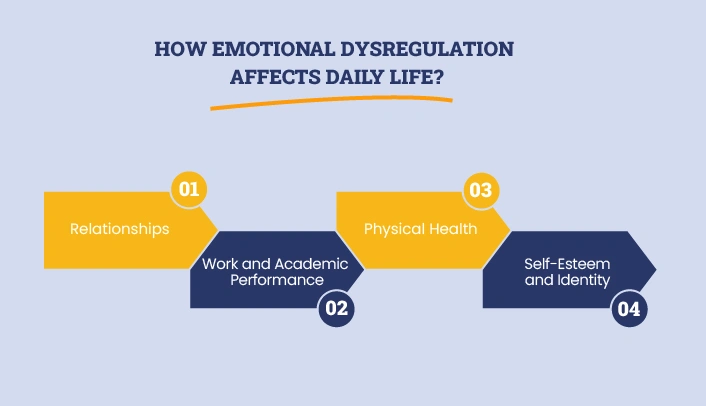
1. Relationships
It severely affects relationships in a way that if you are unable to regulate your emotions, you may face disagreement with others’ concerns, you may face mood instabilities, and you may develop a fear of rejection. Partners, family members, and friends often describe feeling like they are avoiding confrontation. Many people with dysregulation cycle throughout face underestimation in their relationships, which can break trust and stability over time.
2. Work and Academic Performance
Dealing with workplace stress, managing irritability with colleagues, and making good decisions under pressure all deteriorate professional stability. This condition severely affects workplace functioning and career disruption. Students who do not focus on their emotions mostly face similar challenges throughout their careers.
3. Physical Health
People in this state for a long time cause elevated cortisol, disrupted sleep, and increased cardiovascular and immune health issues. The body’s stress response system is directly linked to emotional processing circuits, which means continuous dysregulation develops physical health outcomes with time.
4. Self-Esteem and Identity
Humiliation, self-blame, and undesired self-worth are the results of continuous emotional struggles. Many people express their distress about this condition by saying “I am too much” or “I cannot control myself.” These words deepen the dysregulation cycle without required intervention. By recognizing the connection between extreme mood swings and main causative treatable conditions can meaningfully reduce self-blame and support earlier help-seeking.
Can Emotional Dysregulation be Prevented?
This condtion is isn’t self-generated behavior, and it isn’t always something you can prevent. Some causes, like genetics, neurodevelopmental differences, or injury, are not in your control. Therefore, besides professional treatments, you can take steps to lower your risk and build emotional strength.
Things that may help:
➢ Building support: By spending time with people who are kind and supportive. If you’re undergoing bullying or abuse, go to someone you trust or a professional for help.
➢ Skill Enhancement: Try meditating, mindfulness, or relaxation exercises. Keeping regular routines for sleep, meals, and physical activity can also help stabilize mood.
➢ Set healthy scheduling: Reduce ongoing stress when possible and schedule time for rest. If it’s hard to do this alone, ask your healthcare provider about therapy options for extra support.
➢ Restrict substances: Alcohol and addictive substances can deteriorate mood swings and reduce impulse control, making it more difficult to manage emotions.
Treatment Options for Emotional Dysregulation
Emotion dysregulation requires time and effort to treat. However, sometimes symptoms disappear in a short duration, whereas sometimes it takes a long time.
Talk therapy
Talk therapy, being a widely used therapy, can prove effective in treating this condition, with the strongest research base in borderline personality disorder. It was first developed for borderline personality disorder, but later on, it showed beneficial results for other psychiatric conditions also. According to the American Psychological Association (APA), clinicians may also use cognitive behavioral therapy (CBT), trauma-focused therapies, and other therapies depending on the underlying condition and the person’s treatment goals.
Dialectical Behavior Therapy (DBT)
Dialectical Behavioral Therapy nowadays is the most evidence-based psychotherapy for helping with this condition, designed for emotional dysregulation that emphasizes:
- Undergoing and labeling feelings
- Increases understanding and reduces judgmental behavior for current emotions
- Identifying barriers to altering emotions
- Decreasing emotional exposure
- Increased exposure to positive emotional events
- Altering emotions by altering physiological sensitivity
Cognitive Behavioral Therapy
Cognitive Behavioral Therapy (CBT), being an evidence-based psychotherapy, is best in helping people learn new skills to handle their emotions better. CBT’s main focus is to manage the relationship between thoughts, emotions, and behaviors. As emotions are connected to mental patterns, therapy helps individuals to struggle with unhelpful thoughts and develop healthier emotional responses. While emotions take time to change, the way we analyze and react to them can be altered through CBT techniques.
Medications
Medications like antidepressants and some other psychiatric medications are commonly used with therapy to help stabilize mood and decrease the severity of emotional responses. When used concurrently, medication and counseling both make the other more effective. Medication provides neurological support while therapy builds those skills that will last for a long time.
Achieve Professional Support at Advanced Health Preference Group
Are you or any of your loved ones experiencing emotional dysregulation and looking for professional assistance? If yes, you are at the right place.
Help is within reach!
At Advanced Health Preference Group, we have a team of certified professional experts who offer compassionate support and personalized treatments to help you regain emotional balance. Our team is dedicated to helping you by providing evidence-based treatments. We help you to find balance and control by providing exceptional treatments. Our experts offer a safe and nurturing space where you can talk about your issues without fear of judgment. You can also get treatments virtually through our telepsychiatric treatments.
With patience and practice, you can navigate your emotions and improve your well-being.