

Last updated : May 4, 2026 | Written & Reviewed by Advanced Team
What is Mental Health and Why Is It Important?
Our emotional, psychological, and social well-being is named as mental health. It has direct effects on how we think, act, feel, tackle stress, and make informed choices. From childhood to adulthood, good mental health is important at every stage. It is significant to understand what mental health is and its importance for a balanced and healthy life.
How to Define Mental Health?
Mental health is a term used to describe our emotional well-being and how we manage our feelings, thinking, and actions.
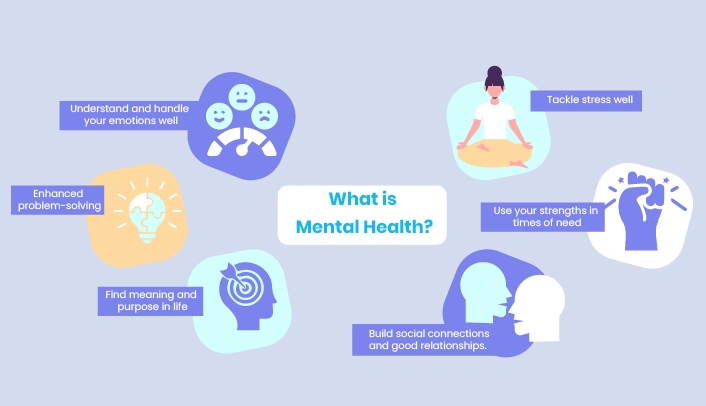
Good Mental health helps you,
- Build social connections and good relationships.
- Tackle stress well
- Find meaning and purpose in life
- Enhanced problem-solving and decision-making skills
- Understand and handle your emotions well
- Use your strengths in times of need
The defines mental health as it is not just the absence of mental illness, but a state of well-being, in which individuals can deal with stress, work effectively, and contribute to their community. This shows that you cannot be considered healthy without mental well-being. Moreover, it shows that mental health can impact our ability to think, act, and feel.
Its effects are:
- Decision-making
- Emotional regulation
- Relationship
- Stress Management
Mental health can affect anyone at any age, but every individual has a different journey. Some people have an easy life, while others may face difficulties, including their response to certain struggles.
When your emotional responses are intensely distressing and start interfering with your daily activities in general, it may lead to some serious mental health conditions.
Importance of Mental Health
Taking care of your mental health is good for your emotions as well as significant for your whole body. Just like our body, our brain also needs care to stay healthy. But the mind and body are not separate; they are part of the same system. When your mental health worsens, your physical health may also suffer, and vice versa. Extreme anxiety, stress, and depression can cause stomach issues, fatigue, and headaches. In severe cases, you may be at risk of conditions like strokes, heart issues, and long-term mental problems. So mental health is very important to live a healthy and balanced life, as mental conditions can disrupt our daily activities. Change in mental health is normal. Things like stress at work, grief, or feelings of worry can all cause mental health challenges.
Poor mental health effects on life:
Productivity loss
Challenges in relationships
School/work difficulties
Suicide risk
Impacts on society and the economy:
Loss of productivity
Increase in health-care costs
Consequences for society
In tough times, you might feel like things will never get better. Fortunately, a mental healthcare professional can help you treat what you’re going through.
What is Mental Illness?
Mental illness refers to a range of mental health conditions that impact your thoughts, emotions, and actions. Mental health illnesses include various disorders such as eating disorders, anxiety disorders, schizophrenia, and more. Many people face mental health problems in their lives. These problems cause frequent stress and affect daily life when they become mental illnesses.
Research by the National Institute of Mental Health (NIMH) shows that one out of five adults is living with moderate to severe mental health conditions.
What Causes Mental Health Conditions?
Many things can affect your mental health, such as family problems, work stress, separation from loved ones, extreme anxiety over everyday issues, and more. Climate change is also causing psychological distress in people, which leads to mental health conditions. These problems can include intense anxiety, PTSD, aggression, and depression.
The following are a few main reasons that can affect your mental health,
- Difficult experiences in life, such as any trauma.
- No care or support when you need it.
- History of mental disorder in the family.
- Chemical imbalance in the brain.
- Daily life choices like the foods you eat, smoking, or drug use.
- You don’t understand how to tackle stress.
Warning Signs of Mental Health Conditions?
Individuals with mental health problems may experience one or more signs as follows:
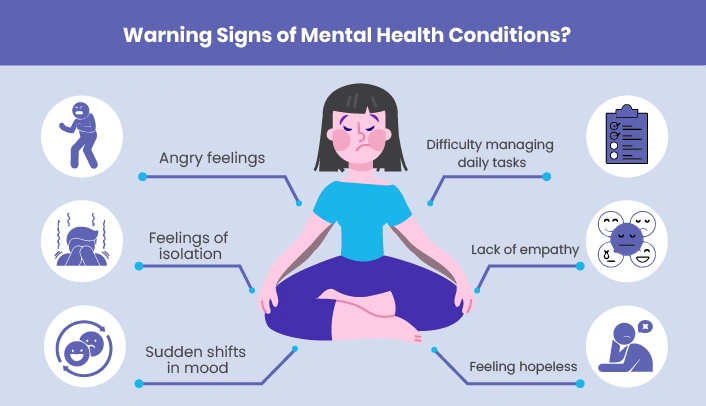
- Unclear thoughts, angry feelings, get upset, scared, and worried.
- Difficulty in daily activities of life.
- Feelings of isolation and loneliness.
- Lack of empathy and feeling detached.
- Losing interest in almost everything.
- Feeling low energy or no energy to pursue anything
- Sudden shifts in mood.
- Feeling hopeless.
- Thoughts of suicide or harming others.
- Unexplainable physical pain.
- Lack of sleep or oversleeping.
- Eating too much or too little than usual.
An individual with stress shows signs of emotional suffering that can result in a nervous breakdown. This makes it difficult for them to continue their daily activities.
Mental Health Connection with Physical Health
The brain works like the control center of our body. It sends signals to all the body systems, which affect everything from the heart to inflammation development. Emotions emerge in the brain, releasing neurotransmitters, which cause physiological responses. Physiological responses caused by poor mental health can result in health problems. In fact, people with mental health problems are at a high risk of facing other health conditions.
People with poor mental health do not take care of themselves physically, which leads to the development of poor health habits. Health issues due to poor mental health that directly impact include,
- Mental health problems and symptoms can cause high blood pressure and high cortisol levels in the body. This can result in stroke or cardiac arrest.
- Mental health disorders are the reason for the brain releasing hormones that reduce the lymphocytes in the bloodstream. It weakens the body’s ability to fight against infections and can lead to more frequent illnesses.
- Stress and other depressive symptoms can cause gastrointestinal problems. These problems are stomach pain, diarrhea, and constipation.
- Experiencing a mental health disorder is really draining, which leads to chronic fatigue.
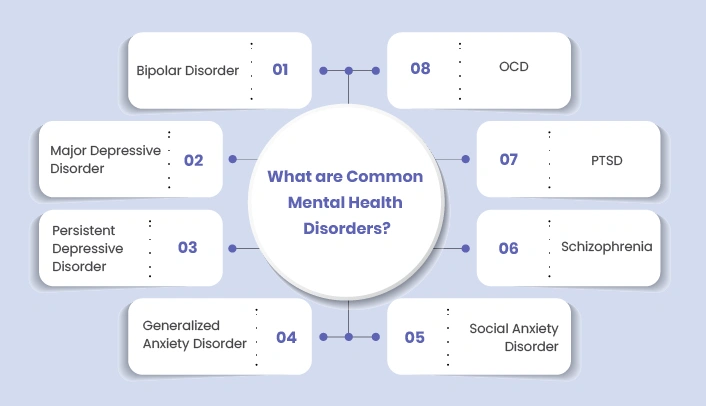
What are Common Mental Health Disorders?
Mental health disorders can affect anyone at any age. Early recognition of signs can help patients to seek timely treatment and improve their mental health. The following are the common mental health disorders.
Bipolar Disorder
Bipolar disorder is a persistent mental health condition recognized by extreme shifts in mood. These mood disorders are named as mania, hypomania, and extreme depression. When in extreme depression, you may feel sadness, hopelessness, and loss of interest in most activities. When your mood shifts to mania or hypomania, you may feel full of energy or unusually irritable. These mood swings can disturb your sleep schedule, energy level, daily activities, and thinking ability.
Episodes of shifts in mood can happen rarely or multiple times a year. Each will last for days, or even weeks. Between these episodes, some people have emotional stability for long periods. Others may often experience mood swings from depression to mania. They can also have both depression and mania at the same time.
Major Depressive Disorder
A person with major depressive disorder may feel chronic hopelessness, sadness, and zero interest in everything. These symptoms may last for at least two weeks and can disrupt your appetite, energy level, and sleep schedule.
Persistent Depressive Disorder
It is also called Dysthymia, a long-term depression that may continue for over two years. However, its symptoms range from mild to major depression. You may experience feeling sad and empty and lose interest in daily activities. It can also cause feelings of low self-esteem, feeling like a failure and hopelessness. These symptoms can significantly disturb your daily functioning and emotional well-being. Persistent depressive disorder is long-term, and managing depression symptoms can be difficult. A combination of talk therapy and medications can treat this condition effectively.
Generalized Anxiety Disorder (GAD)
GAD is a mental health condition recognized as excessive worry over everyday problems. It happens often and is sometimes very hard to manage. It can disturb your daily activities at home or work. It’s normal to feel nervous or anxious, especially after a major life stress. Generally, many people worry about health, money or family matters. But with Generalized Anxiety Disorder (GAD), those worried feelings happen more often and are extreme. People with GAD feel restless and fatigued most of the time and have difficulty concentrating. This anxiety is overwhelming and interferes with your peace of mind.
Obsessive-Compulsive Disorder (OCD)
OCD is a form of mental disorder with unwanted intrusive thoughts that lead to compulsions, which is a chronic behaviour. Individuals often feel powerless to stop these actions even after recognition. These obsessions and compulsions can disturb your daily life and cause extreme distress.
Ultimately, you experience feelings of compulsive acts to ease your stress. These negative thoughts keep coming back, even if you try to ignore or get rid of them. Constant negative thoughts are the violent cycle of OCD. Often, OCD revolves around certain thoughts, like being fearful of getting infected by germs. People with OCD feel ashamed, frustrated, and embarrassed about their condition.
Post-Traumatic Stress Disorder (PTSD)
Post-Traumatic Stress Disorder (PTSD) may develop when an individual experiences any traumatic event. These events can be abuse, a natural disaster, or any incident. Symptoms can be nightmares, extreme anxiety, flashbacks, and uncontrollable thoughts. If the symptoms get worse and last for months or years, and affect your ability to function daily, you may have PTSD. You need to seek help from a mental health specialist.
Schizophrenia
Schizophrenia is a serious chronic mental disorder. It affects an individual’s thoughts, feelings, and behaviour. A person with schizophrenia experiences hallucinations, delusions, and a sense of distorted reality. In hallucinations, they see things or hear voices that aren’t noticed by others. Delusions include strongly believing in things that are not true. People with schizophrenia can experience losing touch with reality, which makes daily living very hard. Moreover, a person also experiences appetite loss in schizophrenia.
It requires lifelong treatment for people with schizophrenia. Many people with schizophrenia are not aware that they have a mental health condition and may not believe they need any treatment. People who have untreated psychosis often have more severe symptoms. These symptoms are poor thinking and processing skills, social outcomes, injuries, and even death. Contrary to this, early treatment often helps control symptoms before serious complications arise.
Social Anxiety Disorder
A person with social anxiety disorder may feel intense fear of judgment and embarrassment in social settings. It results in avoidance of social interactions and extreme emotional distress. Social anxiety disorder has constant symptoms, including:
- Worry about being misjudged negatively in certain social situations.
- Fear of embarrassing and humiliating yourself.
- Extreme fear of interactions with strangers.
- Fear of physical symptoms that can embarrass you, like trembling hands or a shaking voice.
- Avoiding social gatherings out of fear of embarrassment.
- Feeling extreme anxiety during social events.
- Expectations of the worst consequences in a social situation.
How to Treat Mental Health Conditions?
The main purpose of mental health treatment is to recognize the reasons for psychological and emotional disorders. These treatments reduce the symptoms and help the patients to tackle their behaviour and emotions in a better way. Psychiatrists often offer personalized treatments with a combination of therapies and medications. The following are the ways to treat mental health conditions.
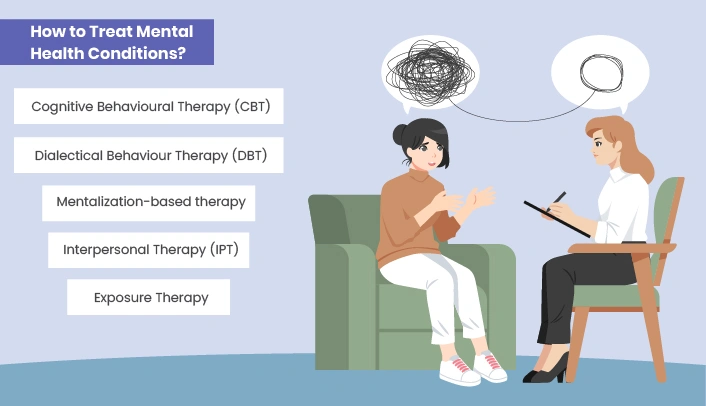
Cognitive Behavioural Therapy (CBT)
Cognitive behavioural therapy is one of the most common forms of talk therapy. We can also call this type of talk therapy psychotherapy. During CBT, you work with a mental health specialist, such as a psychologist or a licensed therapist, in a secure and structured environment. You need to attend a limited number of sessions for full recovery. CBT helps you understand thinking patterns that are creating issues in your life. Understanding the relationship between your thoughts, feelings, and actions helps you manage challenging situations more clearly. With this therapy, you can respond to difficult situations in a more effective way.
CBT is one of the most helpful tools for treating many mental health conditions. It can treat depression, anxiety, post-traumatic stress disorder, also called PTSD, or an eating disorder. Sometimes, the only treatment needed is CBT. Other times, it is combined with other therapies or medications. It is not necessary to have a mental health condition to benefit from CBT. CBT is an effective technique to learn how to tackle stressful life situations better.
Dialectical Behaviour Therapy (DBT)
DBT is a type of cognitive behavioural therapy (CBT). It is one of the most effective treatments for borderline personality disorder and its diagnosis. It is a remarkably successful therapy in reducing suicidal thoughts and self-harming actions. Moreover, it also improves a client’s ability to resist acting abruptly in stressful life situations.
Dialectical Behaviour Therapy (DBT) is an organized therapy that teaches four core skills. These skills are mindfulness, acceptance & distress tolerance, emotional regulation, and interpersonal effectiveness. It helps you create a healthy and balanced life for yourself. Through this therapy your work on those skills in a series of lessons and then apply them to your life.
Exposure Therapy
Exposure therapy is a type of psychological treatment. It is developed to help people confront their fears and phobias. When you are fearful of something, you tend to avoid those objects, activities or situations. However, this avoidance may help reduce fearful feelings in the short term, but in the long term, it can make the fear worse. In such a condition, a psychologist often recommends a session of exposure therapy to help confront the avoidance and fear. In this therapy, psychologists create a safe environment for the patient to expose themselves to the things they fear and avoid. This exposure of feared objects, activities or situations in a safe environment is very helpful to decrease the fear and avoidance.
Exposure therapy is scientifically very helpful to treat a range of mental health conditions, such as:
- Phobias
- Panic Disorder
- Social Anxiety Disorder
- Obsessive-Compulsive Disorder
- Posttraumatic Stress Disorder
- Generalized Anxiety Disorder
The following are the variations of exposure therapy. Your psychologist can help you decide which strategy suits your mental health condition.
- In vivo exposure: In this exposure, an individual faces a feared object, situation or activity in real-life situations. For example, you are fearful of snakes, and the therapist instructs you to touch or hold a snake. Or maybe you have social anxiety, and your psychiatrists instruct you to give a speech in front of an audience.
- Imaginal exposure: Vivid imagination of the object, situation or activity that is causing fear. For example, if you have Posttraumatic Stress Disorder, the therapist will ask you to recall and describe your traumatic experience to decrease the fearful feelings.
- Virtual reality exposure: In some cases, therapists use virtual reality technology. For example, if you have a fear of flying, a therapist will make you experience a virtual flight in their office. It will work with the equipment that offers the sights, sounds and smells of an airplane.
Interpersonal Therapy (IPT)
Interpersonal Therapy is one of the types of talk therapy. It helps improve your relationship with others and reduces symptoms of mental problems. In IPT, a mental health professional will help you to understand your emotions and how they are affecting your relationships. It also teaches you how to depend on support from your loved ones. Moreover, this therapy generally takes a limited number of sessions for complete treatment.
Mental Health professionals mostly use IPT for individuals with major depressive disorder. IPT is the strongest and most efficient therapy for this condition, compared to other mental health disorders. It works as an initial or maintenance treatment for major depression. Psychologists generally suggest taking IPT once a week for 12 to 16 weeks to treat major depression.
Therapists also use IPT to treat other mental health conditions, including:
Binge eating disorder.
- Post-traumatic stress disorder (PTSD).
- Anxiety disorders.
Mentalization-based therapy
Mentalization-based therapy (MBT) is one of the most beneficial evidence-based treatments. It focuses on helping people to understand their own thought patterns and emotions, as well as those of others. The main purpose of MBT is to help improve communication and relationships. Moreover, it also helps people to establish a healthier relationship with themself.
MBT is very beneficial in the treatment of borderline personality disorder (BPD). It encourages a person to understand how their mental states affect their own actions and the behaviour of others. Mentalizing is a process of understanding oneself and others according to mental states. These mental states include beliefs, desires, intentions, and feelings. Through this understanding, people manage their emotions and respond to stress in more positive ways.
Psychiatric Medications Management
When taking psychiatric medication but not getting the desired results? You should consider psychiatric medication management. Many medication management psychiatrists provide accurate psychiatric recommendations. It helps to manage the symptoms of mental illnesses and stay secure from the side effects.
Improve Your Mental Health with the Advanced Health Preference Group
Are you struggling with any mental health condition? Don’t worry, the Advanced Health Preference Group is here with trained health care specialists. We provide you with a safe environment where you can express your emotions without any fear. Our experts prioritize personalized therapies and medication management that your mental health condition requires for better results.